
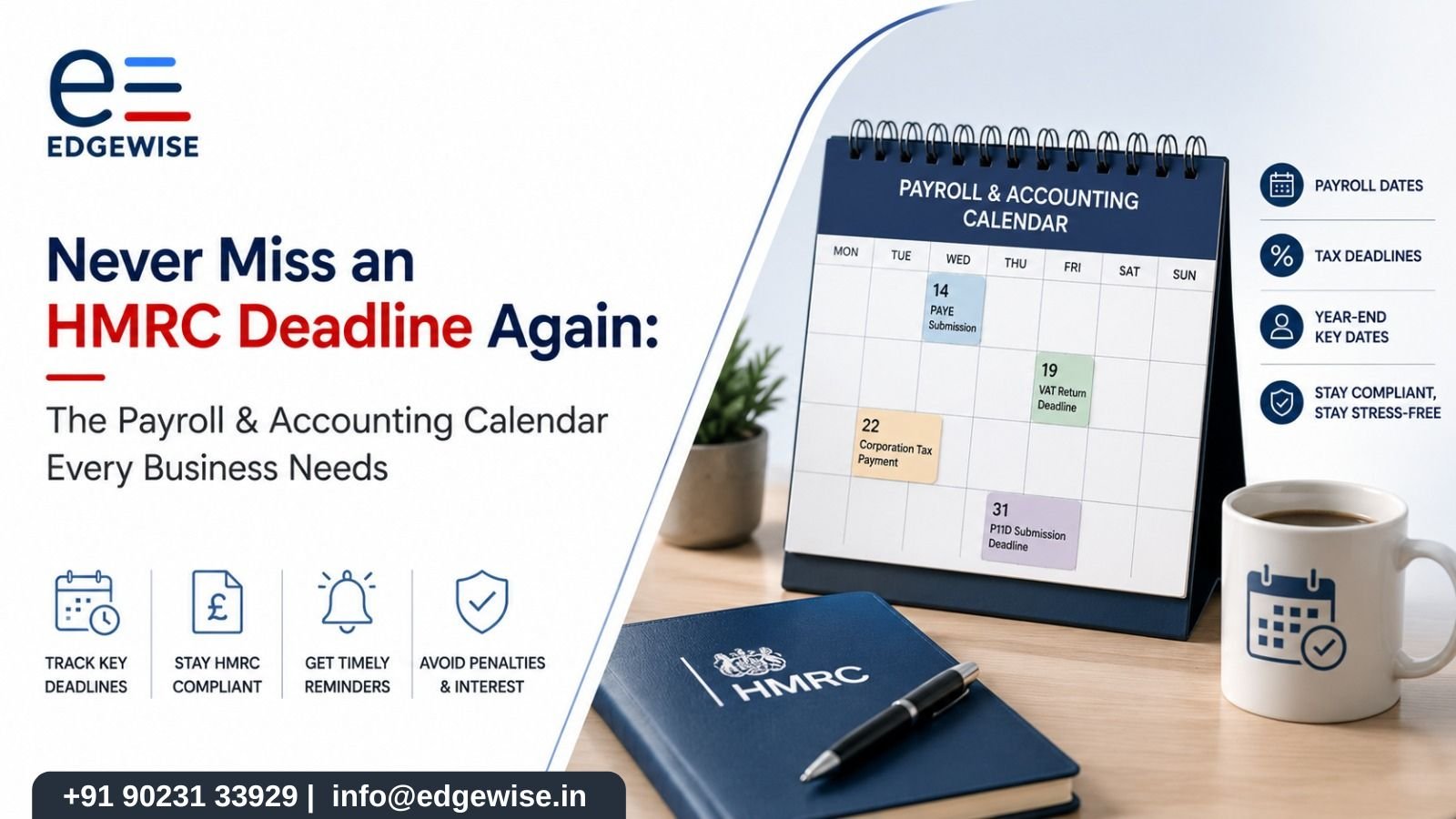
HMRC compliance is not limited to one annual tax return. Accounting practices must manage payroll submissions, PAYE payments, VAT returns, Corporation Tax, Self Assessment and year-end obligations across multiple clients.
A single delay in receiving payroll or accounting information can affect calculations, approvals and statutory submissions. The most effective solution is to plan work around internal deadlines rather than waiting for the official HMRC due date.
Important HMRC Deadlines
Payroll and PAYE
Employers must normally submit a Full Payment Submission, or FPS, on or before employees are paid.
PAYE and National Insurance payments must usually reach HMRC by:
- 22nd of the following tax month when paid electronically;
- 22nd after the end of the quarter for eligible quarterly payers; or
- 19th of the month when payment is made by post.
Important annual payroll dates also include:
- 31 May: Provide P60 forms to eligible employees;
- 6 July: Submit P11D and P11D(b), where applicable; and
- 22 July: Pay Class 1A National Insurance electronically.
VAT
VAT returns and payments are normally due one calendar month and seven days after the end of the VAT accounting period.
The payment must clear HMRC’s account by the deadline, including where the due date falls on a weekend or bank holiday.
Corporation Tax
For most companies, Corporation Tax must be paid nine months and one day after the accounting period ends.
The Company Tax Return is normally due 12 months after the end of the accounting period. Large companies may be required to make quarterly instalment payments.
Self Assessment
For the 2025-26 tax year:
- Paper Self Assessment returns are normally due by 31 October 2026;
- Online returns are normally due by 31 January 2027; and
- The outstanding Self Assessment liability is generally payable by 31 January 2027.
Common Compliance Challenges
Late Information From Clients
Payroll changes, employee details, invoices, expenses and VAT records are often submitted shortly before the statutory deadline. This leaves limited time for processing and review.
Too Many Separate Deadlines
A practice may be managing weekly and monthly payrolls, quarterly VAT returns, year-end accounts and annual tax returns at the same time.
Without a central compliance calendar, important tasks can easily be overlooked.
Manual Workflows
Spreadsheets, emails and manual reminders increase the risk of duplicate work, data-entry errors and missed follow-ups.
Limited Staff Capacity
During payroll periods, VAT quarters and Self Assessment season, internal teams may become overloaded. Rushed processing can increase errors and reduce the time available for client advisory work.
A Practical HMRC Compliance Plan
1. Create a Master Compliance Calendar
Maintain one central calendar covering:
- Payroll processing dates;
- FPS and EPS submissions;
- PAYE payment dates;
- VAT filing and payment deadlines;
- Corporation Tax deadlines;
- Company Tax Returns;
- Self Assessment returns; and
- Payroll year-end obligations.
The calendar should show the responsible team member, current status and information still required from the client.
2. Set Earlier Internal Deadlines
Do not use the HMRC deadline as the practice’s working deadline.
Set internal completion dates several days earlier. This creates time to review calculations, resolve queries and correct rejected submissions.
For example, where payroll is processed on the final working day of the month, require client changes several working days before the payroll date.
3. Standardise Client Communication
Clients should clearly understand:
- What information is required;
- Who should provide it;
- The format in which it should be submitted; and
- The internal cut-off date.
Use standard payroll reminders, VAT document lists and year-end information checklists. Automated reminders can reduce the time spent chasing clients.
4. Use Automation and Cloud Software
Payroll, accounting and workflow systems can automate:
- Payroll calculations;
- RTI submissions;
- Payslip generation;
- Client reminders;
- Task allocation;
- Deadline tracking;
- Bank feeds; and
- VAT reporting.
Automation reduces repetitive work, but final reviews and approval controls should remain in place.
5. Review Compliance Regularly
Conduct monthly or quarterly compliance reviews rather than waiting until year-end.
Check whether:
- Payroll records are complete;
- PAYE balances agree with HMRC;
- VAT records are reconciled;
- Upcoming tax liabilities are understood;
- Client information remains outstanding; and
- Any filing or payment deadlines are at risk.
6. Maintain a Contingency Plan
Practices should prepare for staff absences, software failures, cybersecurity incidents and delayed client information.
Document backup responsibilities, system access, review authority and escalation procedures so that compliance work can continue without disruption.
Why Edgewise Training Solutions Pvt Ltd?
Managing HMRC deadlines across several clients requires dependable processes and sufficient delivery capacity.
Edgewise Training Solutions Pvt Ltd provides accounting and financial back-office support to UK accounting practices. Its services include bookkeeping, payroll support, VAT preparation, reconciliations, year-end support, Self Assessment assistance and management reporting.
Edgewise can work as an extension of the accounting practice by supporting routine and process-driven activities while the UK team retains responsibility for review, submission and client relationships.
Key benefits include:
- Additional support during peak compliance periods;
- Reduced pressure on internal employees;
- Structured payroll and accounting workflows;
- Improved deadline tracking;
- Flexible capacity without permanent recruitment; and
- More time for tax planning and advisory services.
By combining structured processes, cloud accounting systems and reliable offshore support, Edgewise helps practices manage recurring compliance work without continuously increasing their internal workforce.
Conclusion
Meeting HMRC deadlines consistently requires more than working faster near the due date. It requires a central compliance calendar, earlier internal deadlines, standard client communication, automation and adequate team capacity.
With the right structure, payroll and accounting compliance becomes more predictable, errors are reduced and clients receive a more dependable service.
Edgewise Training Solutions Pvt Ltd can help accounting practices strengthen their back-office capacity, manage deadline-driven work and free senior professionals to focus on clients, advisory services and growth.